
29. friendship
on blankets and rat races

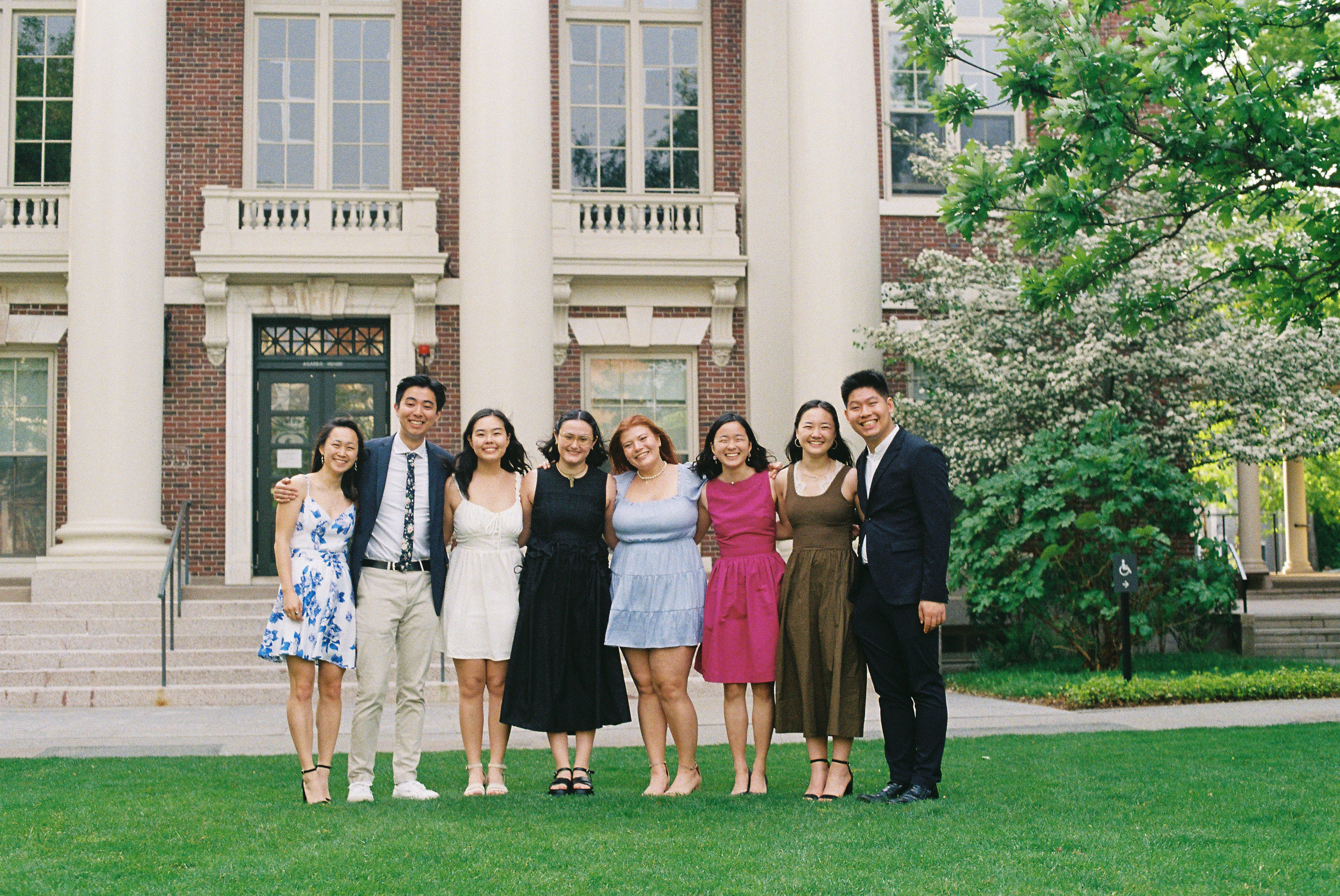
It is graduation season! A fact I’ve been made aware of by the flood of cap and gown photos on my Instagram feed as of late, and — in the grand tradition of making everything about me — it’s reminded me that it’s been about a year since my own college graduation.
I remember, in those waning days of my senior year, being worried about a lot of things: whether I would feel fulfilled without the hoops and ladders of school as extrinsic motivators, how I would adjust to moving to and living in a different country, whether I would ever again taste the heavenly crunch of Honeycomb Creamery’s Salted Caramel Crackle.
Most of all, I was worried about what would happen to my friendships.
The night of graduation, I remember sitting in a hallway common room on the fourth floor of Dunster, surrounded by a dozen or so people holding clear plastic cups swiped from the dining hall, filled with the dregs of whatever bottles and mixers had built up in our dorm fridges over the semester. It was, in some ways, a night like any other — people, drinks, a shaggy carpet and college-issued couches; chatting late into the night about unimportant things; being there just to be there, to enjoy each other’s presence.
On this night, though, there was an air of finality to it all: amidst the chatting and laughing and taking of silly pictures were scattered enough nostalgic “where you there when”’s and “remember that time”’s to fill a medium-sized nursing home. People popped in and out all night: likely coming from or going to any number of similar goodbye gatherings happening across campus — one last chance to take advantage of the fact that all of one’s friends lived within a half-mile radius.
I found myself appreciating, in that moment, how special it it all was — that we could flit so easily in and out of each other’s orbits, that we lived our lives wrapped in so many layers of friendship that we could draw so near whenever we wanted.
Which is, of course, is the great joy of college: having all of your friends live on the same few blocks, knowing that you’ll always have someone you know nearby — like a big friendship blanket. “The opposite of loneliness,” Marina Keegan dubs it, in an essay of the same name that I found myself rereading a lot at the time: “It’s not quite love and it’s not quite community; it’s just this feeling that there are people, an abundance of people, who are in this together. Who are on your team. When the check is paid and you stay at the table. When it’s four a.m. and no one goes to bed.”
There’s a way that this feeling is regarded as a sort of pinnacle of friendship. It’s romanticized, in books and movies: it’s what the lonely protagonists of Y.A. novels yearn for, it’s what the closing scenes of teen rom-coms linger on as the credits roll to show that the main character has finally found themselves. Making friends, the work of friendship, is all in service of reaching this sort of social Elysium, this “opposite of loneliness.”
And it does, indeed, take a lot of work.
I remember walking through the Yard one afternoon my freshman fall. The summer heat had waned just enough to make being outside bearable; the leaves were on the cusp of revealing their fall colors, helped by the nudge of a leisurely autumn breeze; and — eager to take advantage of a rare instance of good New England weather — the Yard was packed with students, slacklining and spikeballing and lounging on picnic blankets. It all felt quite idyllic, like a sort of bespoke movie set.
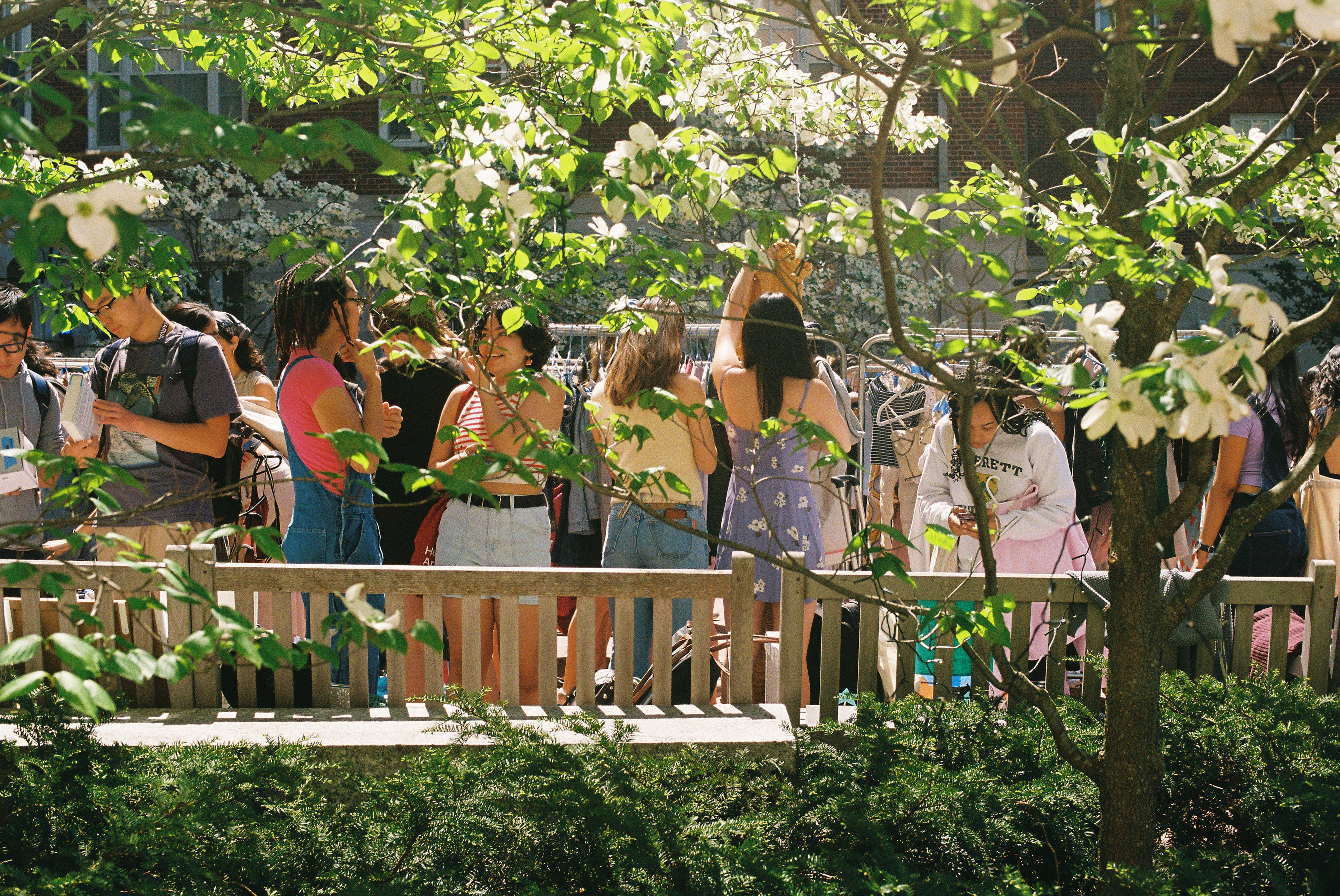
But all I could think about, as my 17-year-old self walked through this platonic ideal of college life, was how out of reach it all felt — how much I missed my friends from home, how I hadn’t found anyone whom I could truly be myself around, and how everyone around me seemed to be doing just fine. I spent more nights than I care to admit that semester FaceTiming my high school friends, in tears, wishing I could be back in California.
And so to have, by senior year, finally made it to my own spot on the grass (metaphorically speaking, of course; there are not nearly enough poop-free patches of grass to convince me to sit anywhere in the Yard), to have found friends with whom hanging out felt effortless and joyful, to have gone from “lonely” to “the opposite of lonely” — it felt like a big accomplishment, one that had taken years of trial-and-error and emotional labor and self-discovery to attain. And the thought that I would soon be leaving this place, leaving this community behind, throwing away all the progress I’d made since my freshman fall, felt not just scary, but, somehow, wasteful.
I remember stumbling over a sentence from Tomorrow and Tomorrow and Tomorrow by Gabrielle Zevin, which I was reading at the time: “At a certain age — in Sadie’s case, thirty-four — there comes a time when life largely consists of having meals with old friends who are passing through town.” It was almost certainly a throwaway sentence, tacked on to the beginning of a chapter to set up a scene, but I remember it sending my post-grad self into quite the nervous spiral. The thought that friendship would devolve from an omnipresent feeling of community into a once-a-year brunch felt horrifying. An unfathomable downgrade.
This is, perhaps, a fear that motivates people to move to New York after graduation; your friendships cannot turn into “getting a meal whenever they pass through town” if you all live in the same town! There’s a saying that living in New York is like Harvard 2.0, that clubs and birthday parties and networking events are rife with enough recent grads that it feels like you never left. Which is, as it is in college, nice in its own way. I remember, when I was living in New York a few summers ago, going to Williamsburg one Saturday and bumping into four (4) different people I knew from school — just walking on the street! In a city of eight million people!
I experienced this phenomenon firsthand back in March, when I was visiting New York for a couple weeks. Having spent the better part of the last year in Taiwan — thousands of miles away and fifteen hours offset from all my closest friends — it felt odd to be able to wake up in Ian’s house, take the 8th Av Express to breakfast with Odessa and Natalie, the F train to lunch with Caroline, and then the M14 to Aviva’s for the night. It all felt so nostalgic, so alluring, to have all of your friends accessible by the tap of a metro card.
Which, of course, all begs the question: Am I a masochist? “Stop complaining and just move to New York, then,” the rational voice screams.

I was talking to Amia, famed author of “2. welcome to shitsburgh,” the other day about whether she still wanted to move to New York. “Not really,” she said, with a surprising lack of hesitation. “The other day, I spent the weekend sitting on my couch doing nothing. Nothing. All weekend.”
This is (particularly for those of you who knew Amia in college) a rather extreme break in character.
“I feel like I’ve spent my whole life in a rat race: in high school, in college — and I think this is the first time I’ve found myself breaking out of it. And I just know that if I were to move back to New York, I’d be right back in it.”
There is, I think, a feeling in college (and in New York) that one cannot stop moving. That if you’re not constantly grinding, you will fall behind — specifically, behind the people around you who are constantly moving, people who you see all the time because, again, it’s college. It suffuses classes and extracurriculars and job applications; the feeling that if you’re not spending hours on interview prep to get a job, someone else who did, will.
And I often found this feeling bleeding into my friendships, too. Your friends are always around, which means, yes, there is always a birthday party to attend or meal to grab — but at times, this, too, makes it feel like you can’t stop moving. One can, of course, choose not to go to a party or skip out on a Jefe’s run, but I found the same questions would inevitably itch at the back of my mind: “What if you regret not going?”, “What if your friends become closer without you?”, “What if deciding to stay in is the butterfly effect that leads you to dying alone with no one but your seventeen hairless cats to attend your funeral?”
I spent more time in college than I care to admit worrying about whether a friend felt the same way about me as I did them, whether my friendships were simply friendships of convenience, whether someone being “too busy” to hang out meant that they had moved on. And those are the parts of college that, I think, are easy to forget: the maintenance required to keep the edges of the friendship blanket from fraying — though it does all become much more apparent once the blanket is taken away.
Which is, in many ways, what graduating and going to Taiwan was, for me. Being on the other side of the Pacific Ocean makes it a little hard to pop by a friend’s to watch a movie, to FaceTime them to debrief after a particularly bad date. At first, I found myself attempting to keep the blanket intact; I tried organizing weekly movie nights and scheduling regular calls with my friends from college, but time zones and work schedules and traveling proved fearsome adversaries. And in the end, I was left with but a handful of threads — a friendship scarf, perhaps.
Which, I’m realizing, has turned out pretty okay.
I have, in some ways, just gotten used to the cold; I spend a lot more time alone these days, writing or reading or scanning rolls of film, and for the most part, I’m okay with it — with staying in and watching a movie or eating at a restaurant by myself. But I’ve also found my little friendship scarf to be much more warming than I thought it would be. With the convenience of college social life gone, every interaction requires more effort — every trip needs planning, every FaceTime call needs scheduling — and feels, consequently, more deliberate, more meaningful. I’ve found myself growing more appreciative of the much smaller number of friends I do still keep in touch with, and I feel closer to them than, perhaps, I ever have.
Looking back, it occurs to me that, for almost my entire life, I’ve defined my friendships by how much time I spend with them. This is, I think, pretty normal; when you’re in school, your closest friends are the people you sit next to at snack time, who you play with at recess, whose houses you go to after school. And I think this is the first time in my life I’ve found myself dismantling physical proximity or frequency of contact from friendship. My closest friends live hundreds or thousands of miles away. Some of them I have only talked to a handful of times in the past year. And yet, weirdly enough, I feel more happy and healthy and secure in my friendships than I have for as long as I can remember.
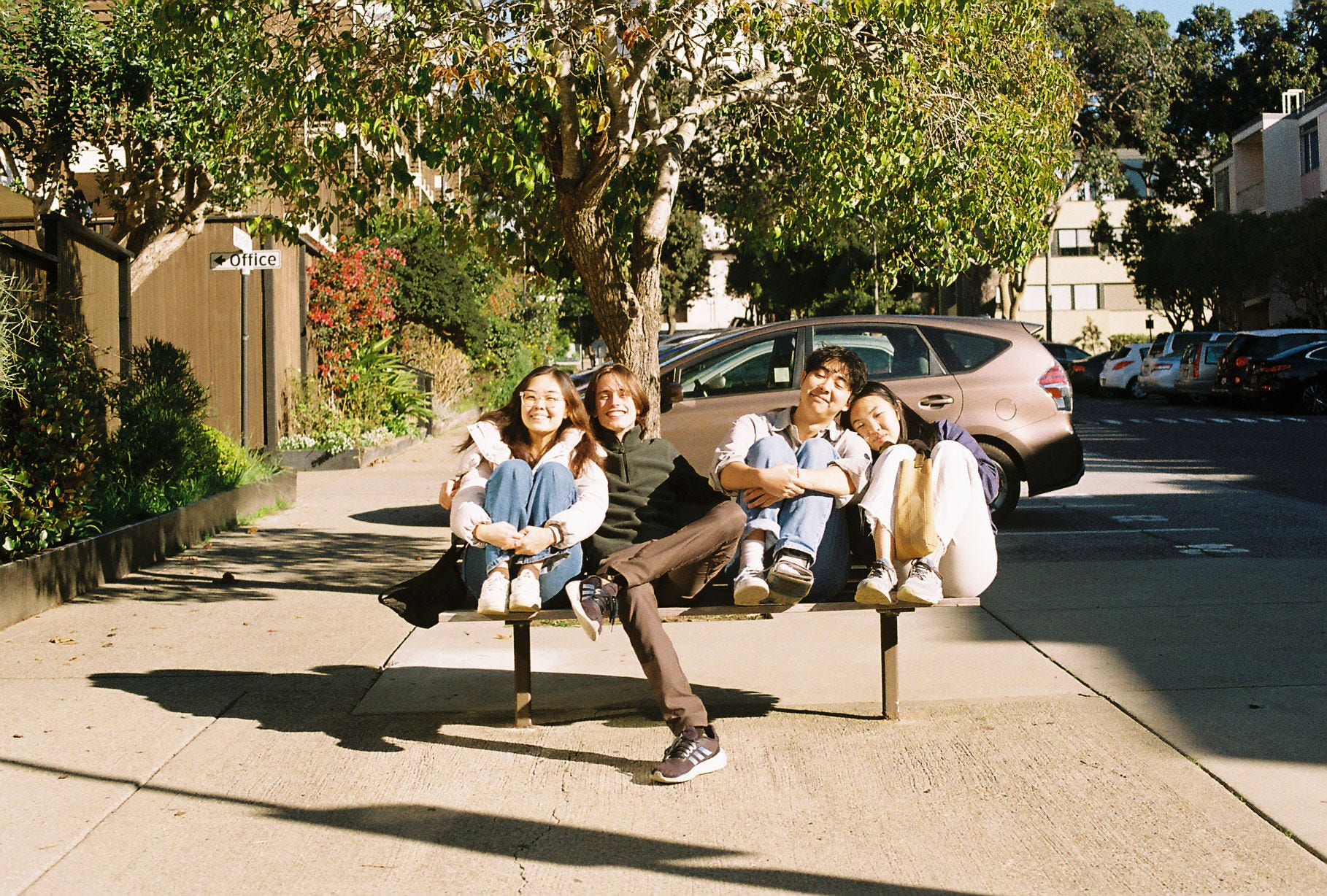
So yea, things are good these days. But of course, that doesn’t mean I’m not plagued by constant, crippling fear about what lies ahead (as almost every post in this Substack has evidenced) — for example, whether, once I move to LA, I will make new friends whom I see in person all the time and who, eventually, will become far more important to me than the friends I have now. I don’t want that to happen! I like the friends I have now! If I had Clay’s infinity stones, if I could snap my fingers and have all my friends live within walking distance of me, I probably would — which feels like a sign of not having actually learned what is ostensibly the lesson of this post. Or perhaps a sign that the lesson isn’t really worth learning, in the first place?
There’s a quote from Conversations with Friends by Sally Rooney (a book, for those interested, that is all about these questions of power dynamics of friendship):
“You can love more than one person, she said. That's arguable. Why is it any different from having more than one friend? You're friends with me and you also have other friends, does that mean you don't really value me? I don't have other friends, I said.”
If there’s one way I can say that I have grown this past year, it’s in dismantling the idea that friendship is a zero-sum game. I think it can feel that way sometimes — both in and out of college — but I think the Kalos of today has come to realize, far more so than the Kalos of one year ago, that different friends can fulfill different roles in your life; that making new friends doesn’t mean you have to give up old ones; and that, in the end, one should strive to spend much less time worrying about, fearing the loss of, or writing essays about friendship — and should just spend that time with friends, instead.
Have a message for Kalos? Wanna say “thank you” or “i feel that” or “i disagree” or “please marry me”? You can do so using the Reply Box below!